Martial Arts Journey
Taekwondo has been my longest running discipline outside the classroom. Each belt is a checkpoint - not a trophy - marking what I had to understand before I could move past it.
Taekwondo
WTF / Kukkiwon · Martial Arts Academy Sunnyvale
Black is not an end — it is the beginning of true understanding. The term 'Dan' (degree) begins here, recognizing that the practitioner has built a foundation solid enough to now teach others. In Korean philosophy, black absorbs all other colors: every belt earned before this moment is contained within it. The goal.
Red signals danger and control — a warning to opponents that the practitioner has reached a high level of skill, and a reminder to the student that power must be wielded with discipline. The red belt requires mastery of advanced forms, powerful breaking techniques, and the mental maturity to remain calm under pressure.
Brown represents the earth — the tree is fully grown, with deep roots and strong branches. At this advanced level the practitioner refines and owns their technique rather than just executing it. Brown belt demands that everything learned so far becomes second nature: sparring becomes strategic, poomsae becomes expression.
Blue represents the full sky the plant now reaches toward — ambition grounded in real skill. At this rank the practitioner is expected to demonstrate not just technique but composure: forms under pressure, controlled sparring, and breaking. Standing on the mat in a white dobok with a blue belt for the first time felt like a clear line between who I was at white belt and who I am now.
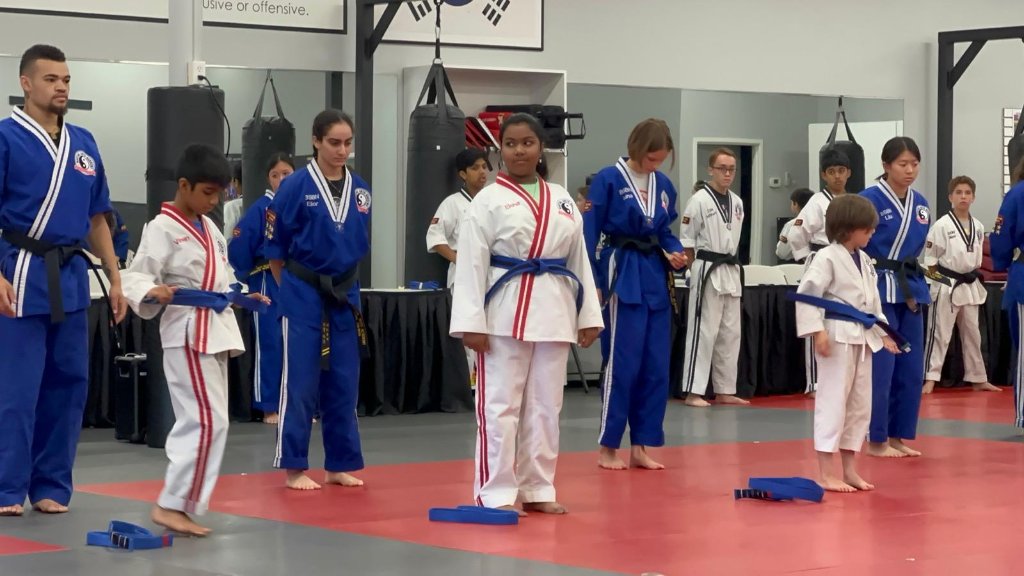
Tying the blue belt for the first time — ceremony at the Sunnyvale dojo
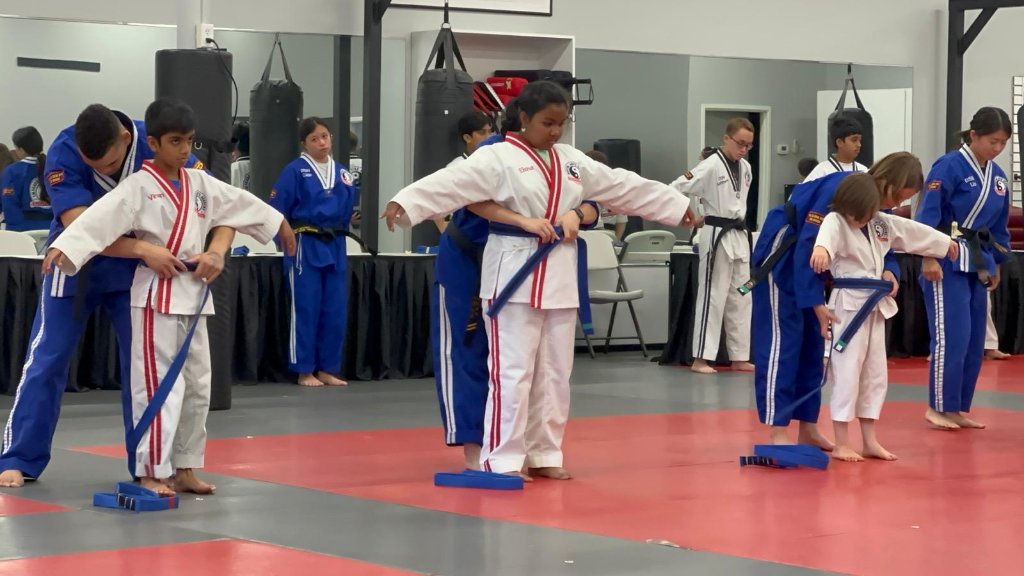
Executing a controlled kick during the grading demonstration
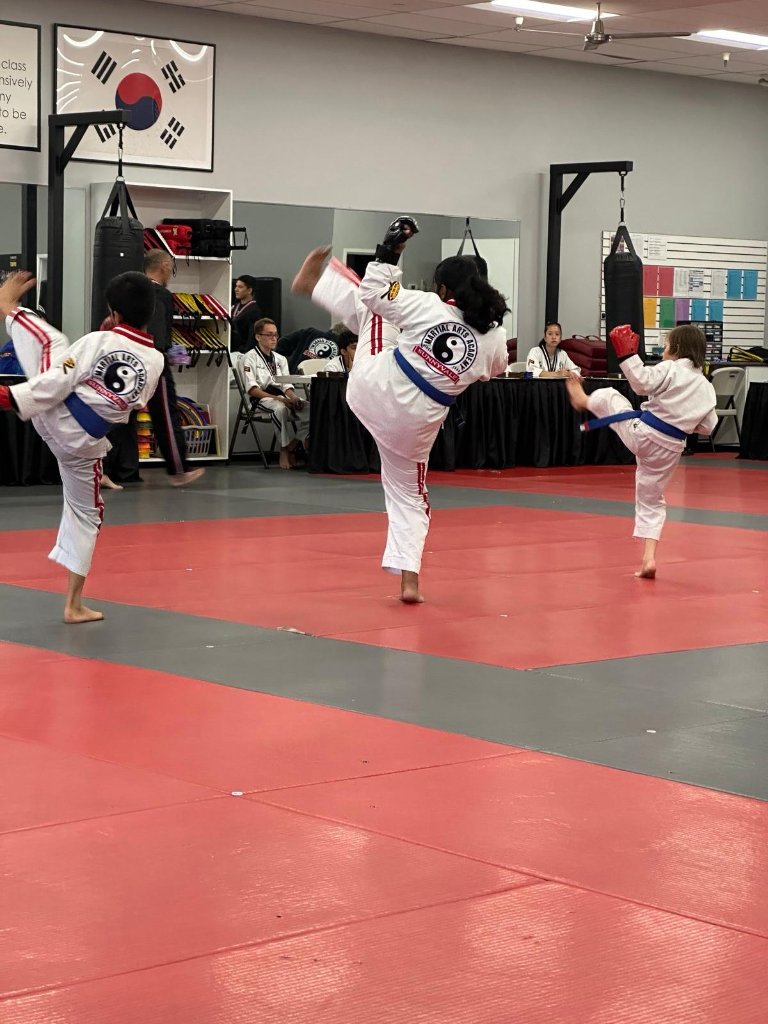
Sparring sequence — technique over force
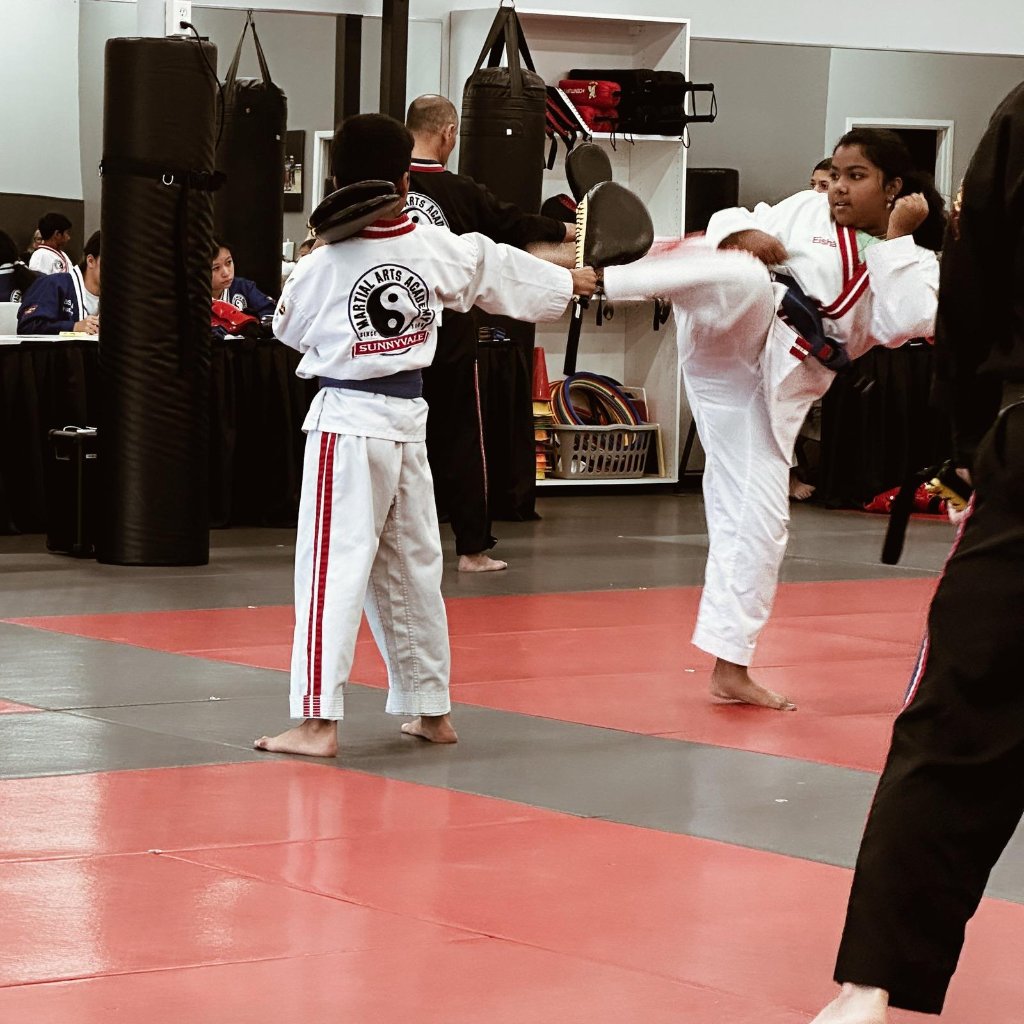
A front kick that lands — the result of two years of drilling
Purple marks the sky at dawn — the student is approaching an intermediate level where the foundations are solid and higher-order thinking begins. Poomsae sequences become more complex, the grading panel more exacting. This was the most demanding transition so far — the kind where you can't fake preparation.
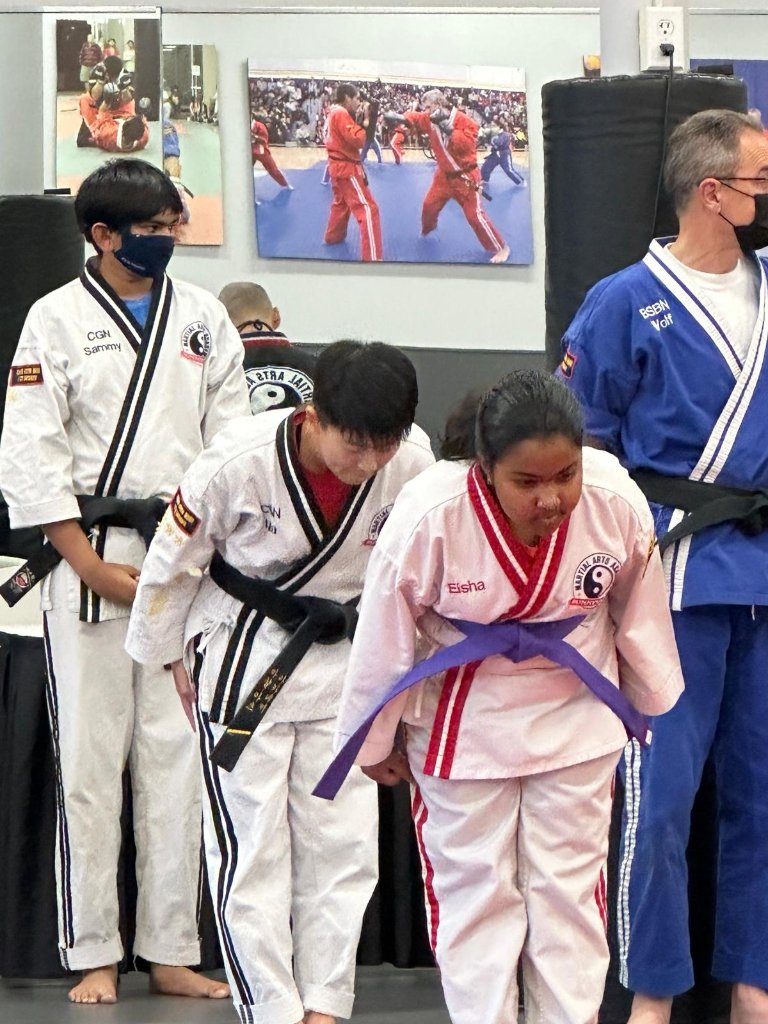
Bowing in at the purple belt grading ceremony — Sunnyvale dojo
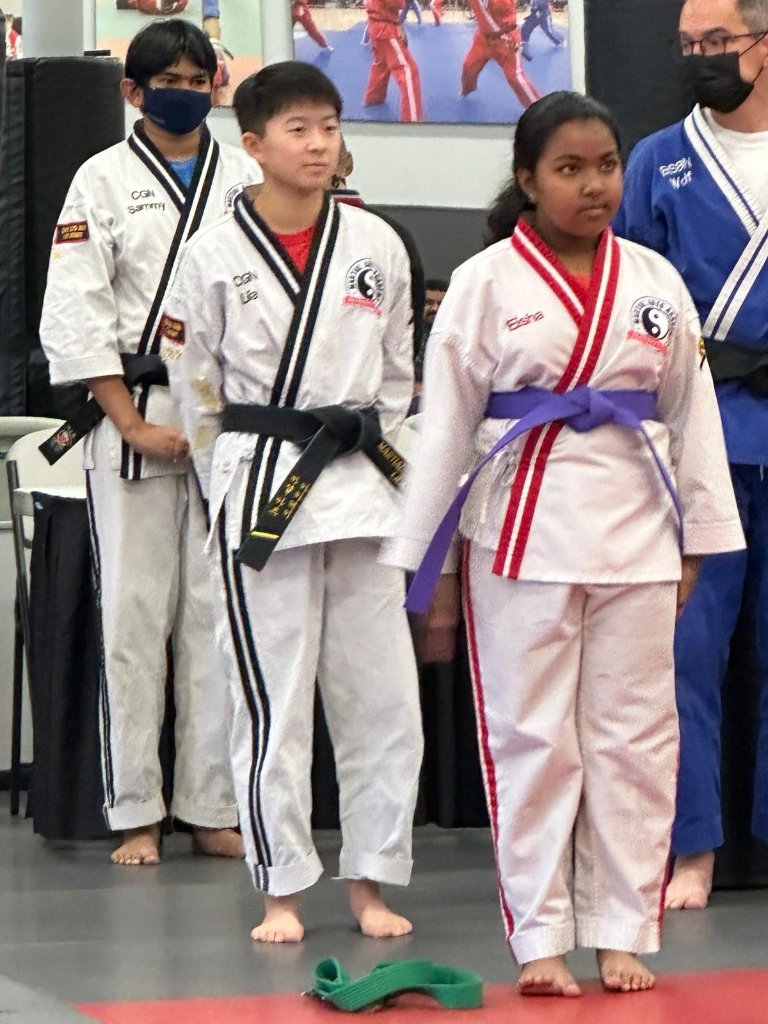
Standing ready at attention before the grading begins
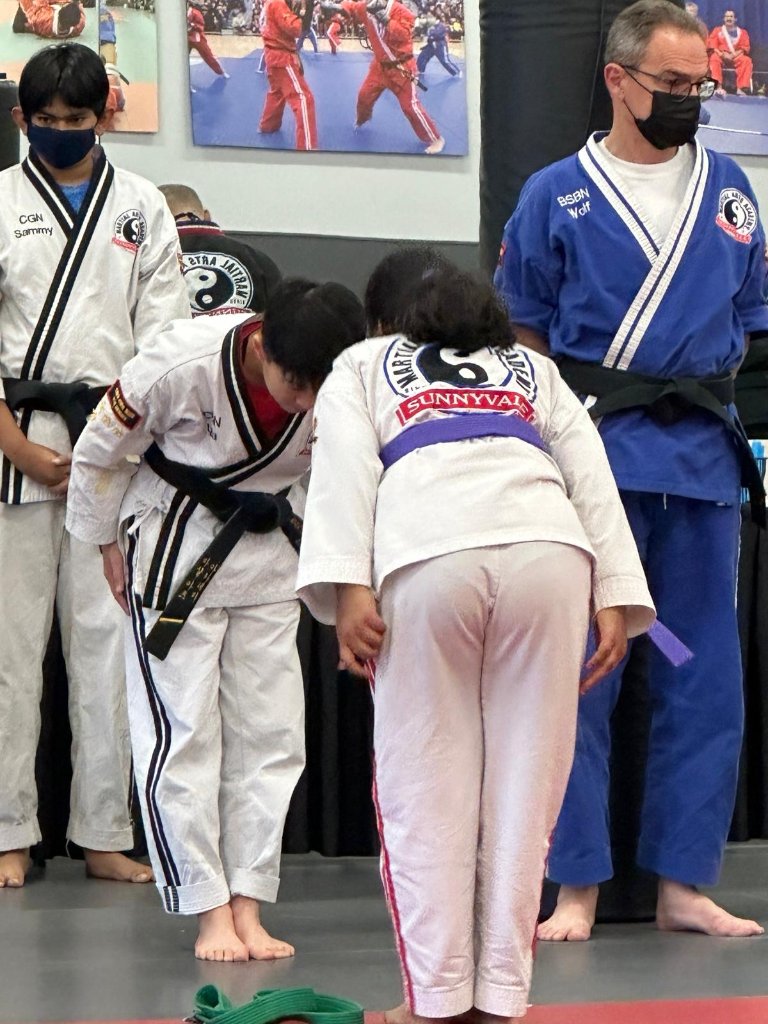
Receiving the purple belt — a moment of quiet focus
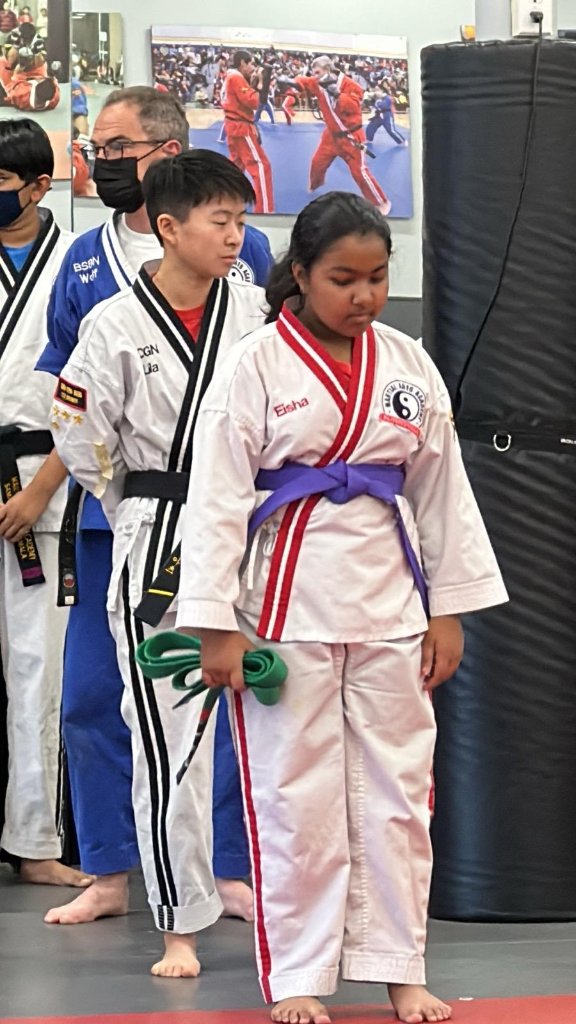
Focused and composed after the grading
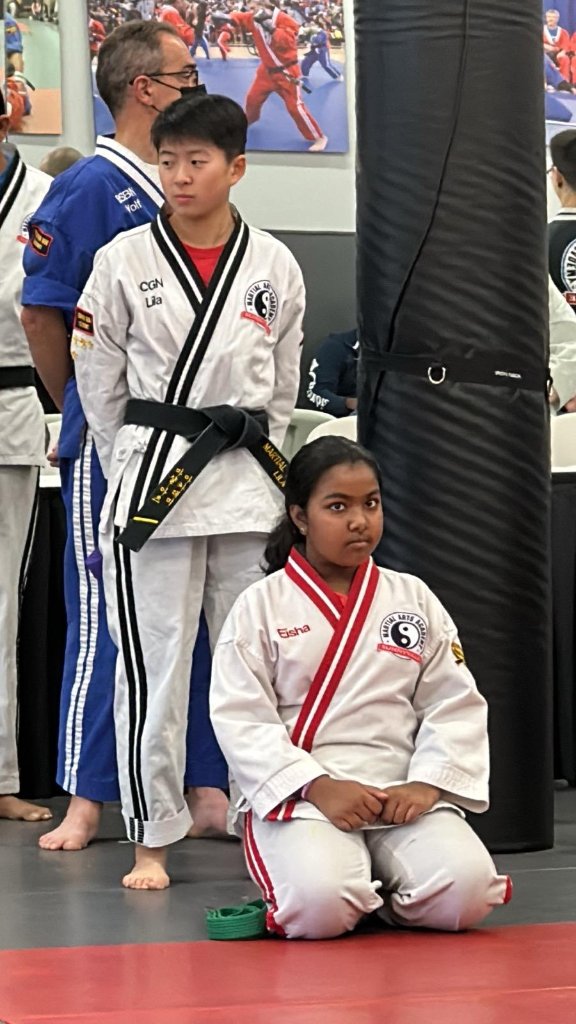
Waiting for the next round — stillness before motion
Green represents the plant breaking through the soil — growth that is now visible. This is where technique starts to layer: combinations replace single strikes, footwork becomes tactical, and competition sparring feels less reactive. You start reading an opponent rather than just surviving the round.
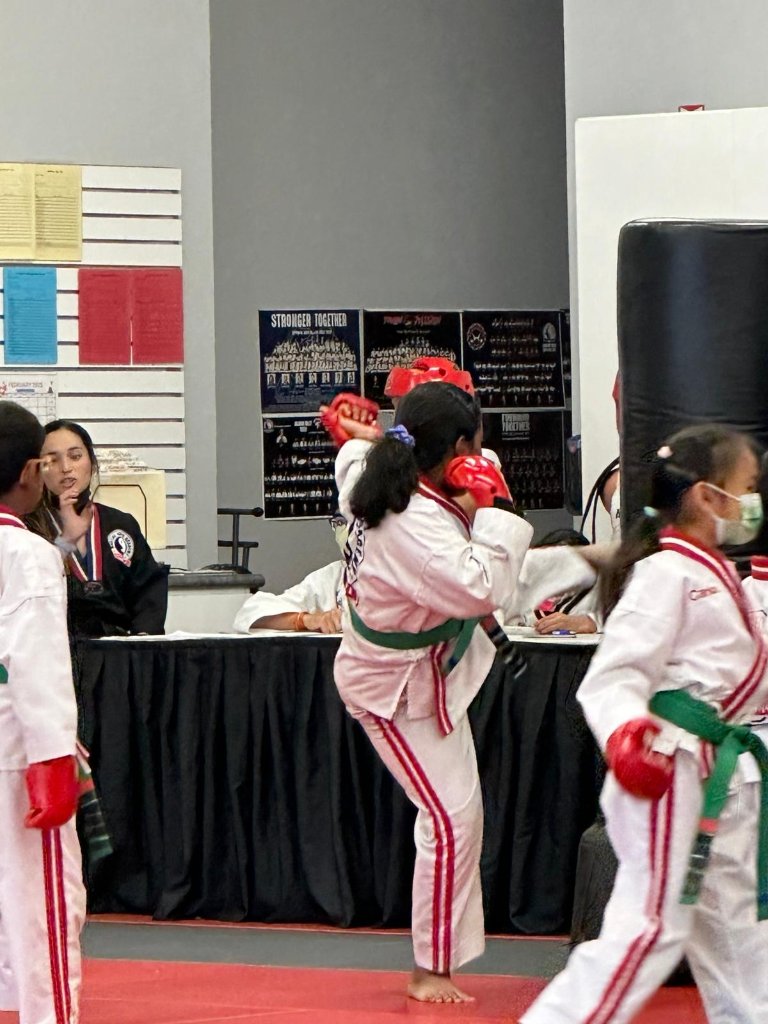
Competition sparring at green belt level — landing a clean kick at the Sunnyvale dojo tournament
Orange marks the strengthening sun — energy gathering, roots deepening. The student is no longer a complete beginner; fundamentals are becoming habit. Kicks get cleaner, stances become more instinctive, and sparring stops feeling like chaos. The work becomes more deliberate here.
Yellow represents the sun beginning to shine on the seed — the first rays of understanding breaking through. At this level the basic stances, blocks, and first poomsae pattern (Taeguk Il Jang) take shape. It's where you first realize that the body has to learn separately from the mind.
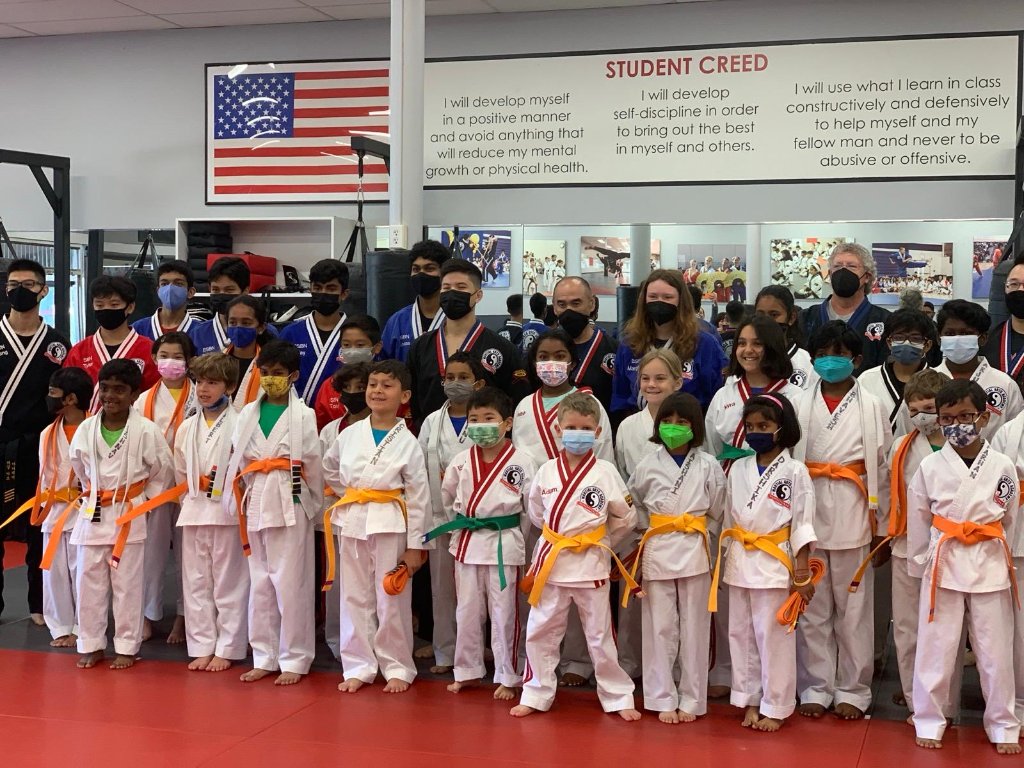
Post-tournament group photo at the dojo — competing with orange and yellow belts, Sunnyvale
White is the beginning — the absence of knowledge. In Taekwondo it represents a seed planted in the ground: no experience, no preconceptions, just the openness to absorb. I started here with no prior martial arts background, learning to stand correctly before I could learn to move.